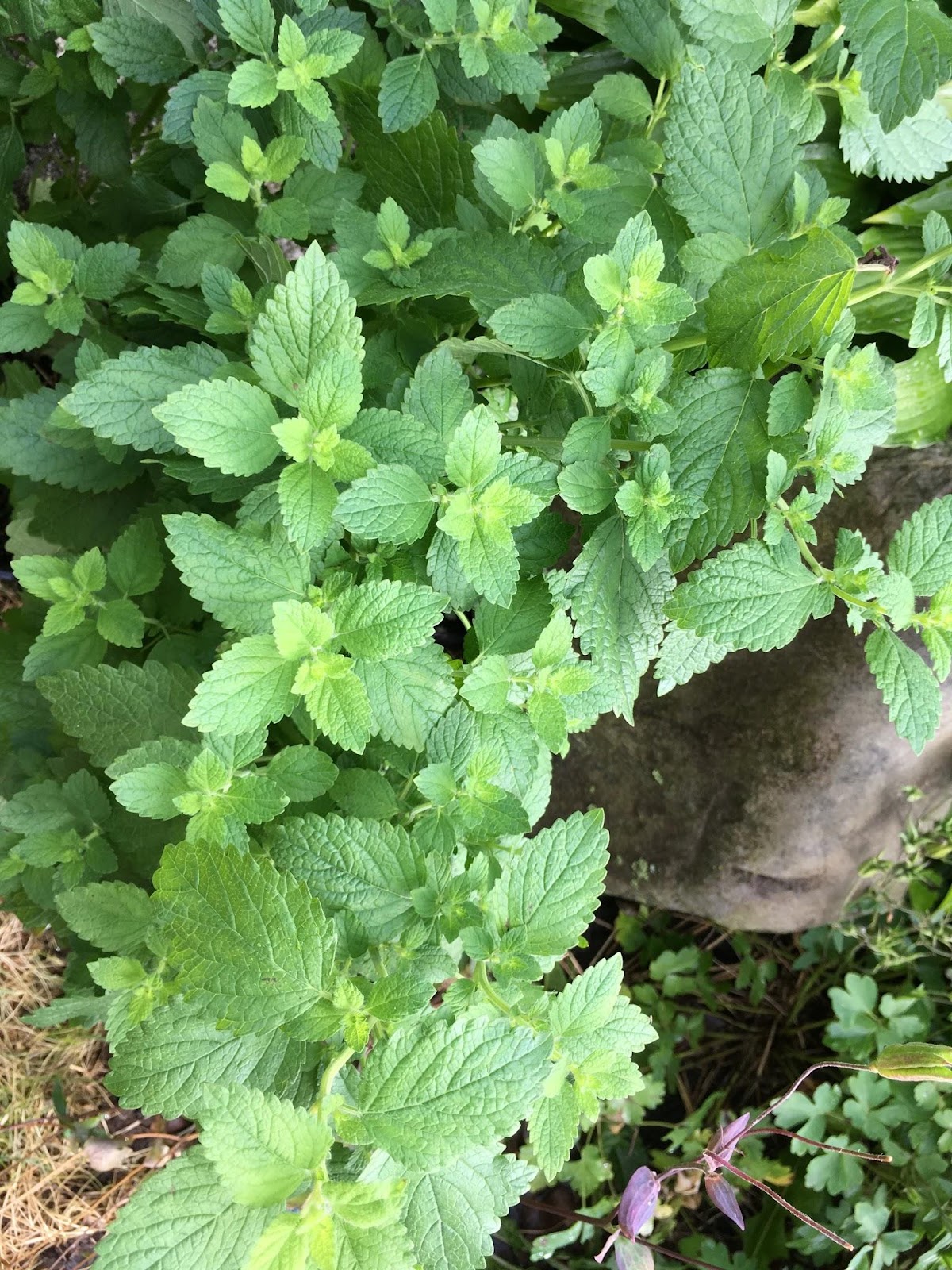
BeWell Bohemia Herbs & Things
Herbal Monograph, by Brooke Criswell
Thyme -Thymus vulgaris
 Who does not know, and find themselves occasionally singing the lyrics of the folk song made famous by Simon and Garfunkel, “Parsley, sage, rosemary, and thyme…” The last in a list of beloved herbs referenced, thyme closes the line. Do you know the plant as well as the lyric? Does it come to mind when cooking? Considering herbal medicine? Well, this herb offers much in kitchen and apothecary alike; from the heady aroma of a thyme steam, to the flavorful seasoning in main dishes.
If you have a head cold, a thyme steam works wonders to clear your sinus and ward of infection due to its antimicrobial aromatic constituents that enter the respiratory tract upon the moist air as the steam is inhaled. Katja Swift of Commonwealth Center for Holistic Herbalist touts the effectiveness of a thyme steam, both at the onset of infection and as a preventive measure in advance of illness, “...breathe in that hot Thymey steam. It’s hot alright – and not just because the water was boiling, but also because the volatile oils themselves are super carminative. It will feel pretty intense to breathe in deeply, but try to – the further down into your lungs that you can get that Thymey steam, the more microbes you’re literally killing on contact! So breathe deep, and have your handkerchief at the ready, because this is one of the best sinus-clearing methods I know.”
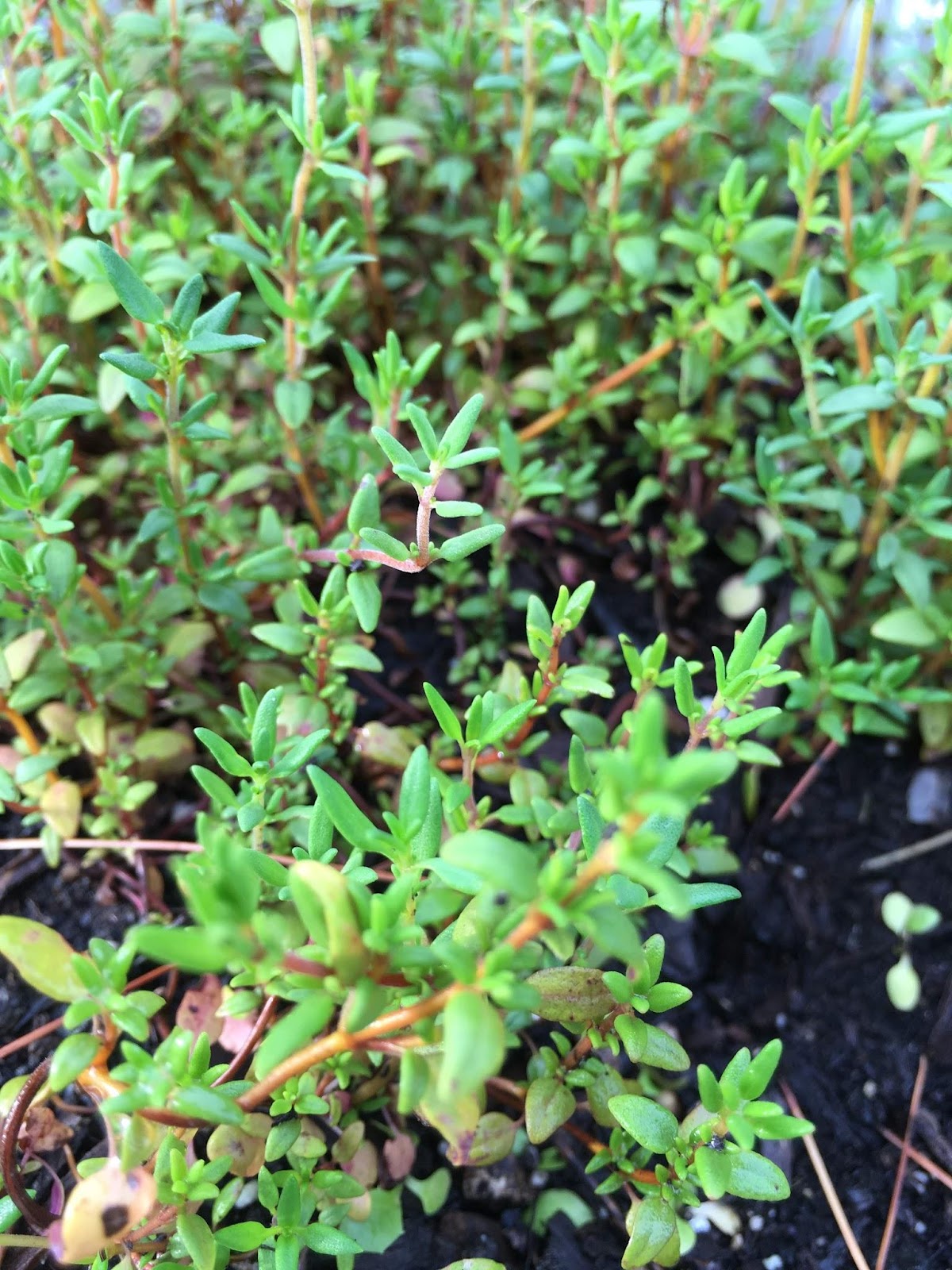 Thyme grows as a creeping ground cover, that develops woody stems in areas where it successfully overwinters. An excellent plant for rock gardens, or as a low growing plant beneath taller growers. Thyme holds a long history in Greek, Roman, and Medieval European cultures; associated with imparting courage, warding off evil, and as a healthful tonic. Contemporary research explores many and varied compounds and actions of Thymus vulgaris. The abstract of Determination of total phenolic content, antioxidant activity and antifungal effects of Thymus vulgaris, Trachyspermum ammi and Trigonella foenum-graecum extracts on growth of Fusarium solani states, “... thyme and fenugreek are spice and aromatic crops with a number of medicinal properties which are known as important sources of essential phytochemicals. The purpose of this study was to investigate the antioxidant capacity, total phenolic content and antifungal activities of these plant extracts…” This, and many other studies, discuss the impact of thyme, in either essential oil or plant extract (in alcohol) form. The article explains the methods and conclusions of the study, including a detailed description of how the essential oil of the plants were collected, and how the plant constituents were extracted in alcohol solutions. The study showed that many phytochemicals are present in thyme, and reinforced that the method used to extract phytochemicals informs which are present, and to what degree, in the resulting item. Or to put more simply, whether you use water, vinegar, or alcohol determines what attributes of thyme are extracted; different constituents are soluble in different media. This is true not only of thyme, but of any plant used to make herbal concoctions. If you have little interest in specialized scientific research into plants, but are curious about the plant’s cultivation needs, and at home uses, we can turn focus there.
As a home gardener, thyme will be used as a tea, spice, or even to make homemade tinctures, oxymels, vinegars, or other herbal preparations, rather than as an essential oil, which requires special equipment and vast amounts of plant material. Many of the benefits of thyme are accessible via home preparation. Additionally, thyme has much to offer the garden ecosystem: a companion to brassica family plants, thyme may repel cabbageworm and whitefly. Thyme is also reported to enhance the growth of some nightshade family plants, including potato, eggplant, and tomato.
Garden Use
Growing Conditions
Thyme grows as a bushy, or creeping & low-growing woody perennial (depending on cultivar) in zones 5 through 9. While thyme will tolerate poor soil, good drainage is a must; without good drainage, thyme may be susceptible to fungus. TanyaDenckla, in The Gardener's A-Z Guide to Growing Organic Food states that pruning helps keep the plant bushy and prevent it becoming, “woody and straggly.”
While not especially noted for its flower, thyme is a summer bloomer, flowering in June and July.
Preferences
- Full sun
- Well-drained, light, dry to stony poor soils
- Tolerates drought
- pH 5.5 - 7.0
Plant details
Flowers pink to lilac* varies (along with leaf color) depending on cultivar
Height to 12 inches* varies by cultivar`
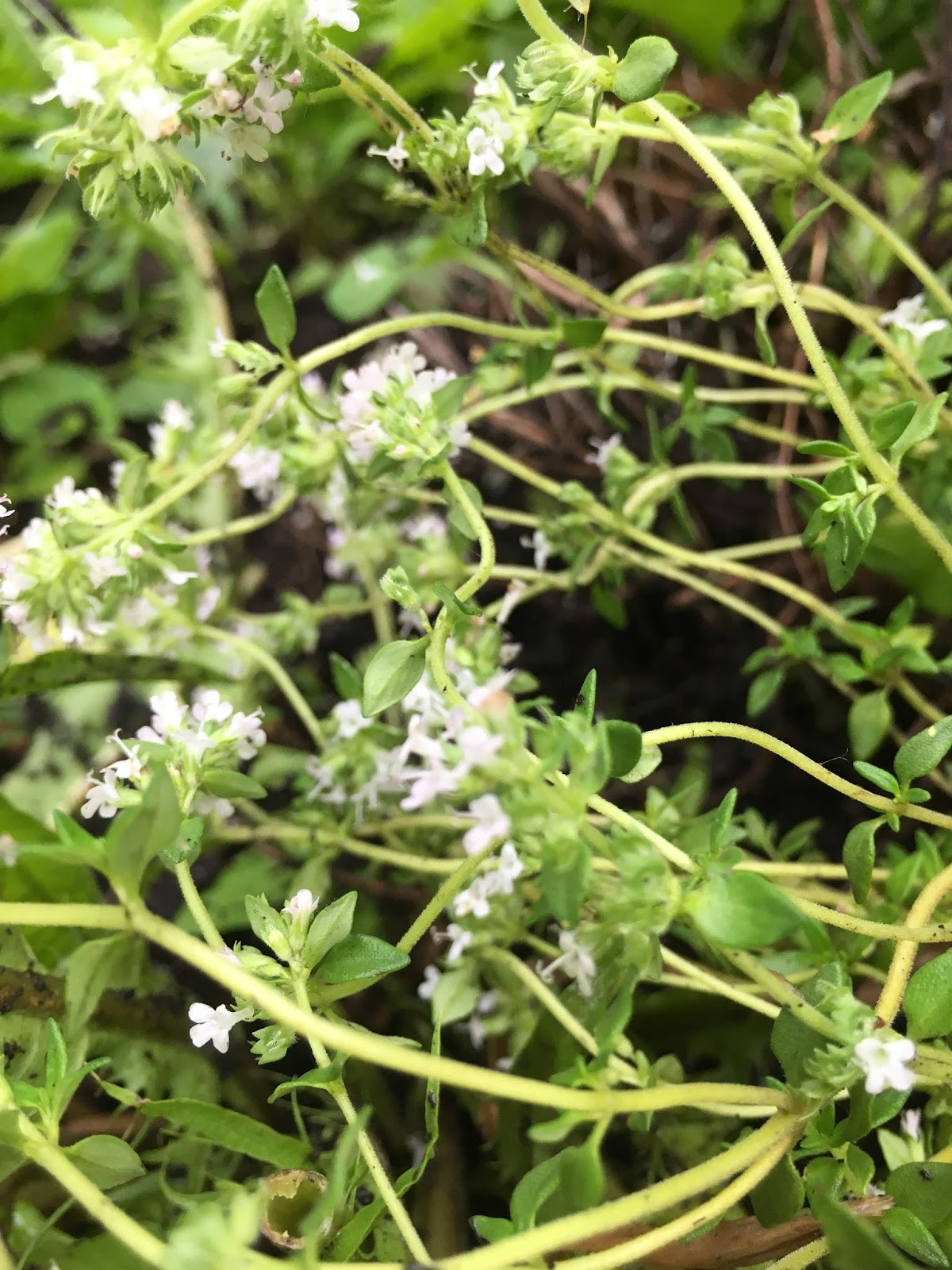 Width 18 inches - 3 feet* varies by cultivar and pruning
Companion Planting Affiliations
Thyme enhances the growth of many nightshade family plants
Potato
Eggplant
Tomato
Thyme repels pest insects, including:
Cabbageworms
Whitefly
“Bees love the tiny blossoms.”
Care notes
Be sure to site thyme in an area of your garden that has consistent and expedient drainage. Thyme does not tolerate ‘wet feet’. Choose a spot with ample sunlight. Remember, thyme is a mediterranean plant by origin, and thus is partial to warm, balmy, sunny, and dry conditions.
Herbal Use
Parts Used - leaves, aerial parts
When to Harvest
Harvest as needed for use or midsummer cut plant back to 2 inches of growth. Freeze or dry the harvest for future use. After the cutting, the thyme plant will regrow before onset of winter. Continue to make light harvests for single use, but if you trim back the second growth before winter, the plant may struggle to survive the winter.
How to Prepare
Rodale’s Illustrated Encyclopedia of Herbs asserts, “[Thyme] has served as a carminative, vermifuge, rubefacient, and antiseptic. Thyme is particularly beneficial in quieting gastrointestinal complaints…. A tea ..for shortness of breath and congested lungs.”6
Below are some ideas for using your home grown yarden thyme as a culinary spice and medicinal concoction. I love the savory flavor of thyme in tea; warming of a winter day and refreshing iced in summer.
- As a tea - Infuse the herb in boiling water to extract many of the beneficial constituents.
- Boil water
- Place 2 tsp of fresh thyme or 1 tsp of dried herb per 8 oz water into teapot, press, thermos, or mason jar
- Pour boiling water over herb
- Cover - if uncovered the constituents will rise with the steam, and you will have a less flavorful, less potent infusion
- Allow to steep - 12 minutes is my favorite flavor and texture; infuse least 10 minutes to extract medicinal doses of constituents
- Strain and Enjoy!
- Drink while hot
- Cool, add ice, and savor the savory.
Add dried or fresh marjoram to dishes while cookingUse in recipes
> “Add sprigs of fresh thyme to olives in their brine”6
> “Serve sprigs of thyme on iced beet borscht that has been topped with plain yogurt”6
> Saute sweet peppers, onions, and garlic in olive oil; add thyme; serve over pasta, rice,(6) or spiralized vegetables
If you have a head cold, a thyme steam works wonders to clear your sinus and ward of infection due to its antimicrobial aromatic constituents that enter the respiratory tract upon the moist air as the steam is inhaled. Katja Swift of Commonwealth Center for Holistic Herbalist touts the effectiveness of a thyme steam, both at the onset of infection and as a preventive measure in advance of illness, “...breathe in that hot Thymey steam. It’s hot alright – and not just because the water was boiling, but also because the volatile oils themselves are super carminative. It will feel pretty intense to breathe in deeply, but try to – the further down into your lungs that you can get that Thymey steam, the more microbes you’re literally killing on contact! So breathe deep, and have your handkerchief at the ready, because this is one of the best sinus-clearing methods I know.”1
As a flavored (infused) honey
Follow the recipe from “Pantry Profiles” in the Fall 2018 Issue of Herb Quarterly
- Fill a glass jar ⅔ full with fresh thyme. Including leaf and blossom
- Cover with Raw honey
- Stir to remove air bubbles
- Seal jar and set in a sunny window for two weeks
- Gently heat honey over low heat (less than 110degrees farenheit) so that you may strain out the thyme
- Place in airtight bottle and store in a cool dry place
The honey can be used to sweeten tea, or seltzers or taken by spoonful as medicinal dose, or in any way you would otherwise use honey.
Cautions/Considerations
Fresh thyme may be enjoyed ingested or topically.
Do not ingest or apply topically the essential oil of thyme, it is very concentrated and must be diluted in a carrier oil for topical use or diluted in water for steam inhalation.
Reference List
1. “Thyme: Herb of the Week · CommonWealth Center for Holistic Herbalism.” CommonWealth Center for Holistic Herbalism, 12 Apr. 2018, commonwealthherbs.com/thyme-herb-week/.
2. Gedikoğlu, Ayça, et al. “Evaluation of Thymus Vulgarisand Thymbra SpicataEssential Oils and Plant Extracts for Chemical Composition, Antioxidant, and Antimicrobial Properties.” Food Science & Nutrition, John Wiley and Sons Inc., 2 Apr. 2019, www.ncbi.nlm.nih.gov/pmc/articles/PMC6526640/.
3. Denckla, Tanya L. K. The Gardener's A-Z Guide to Growing Organid Food. Storey, 2003.
4. Buchanan, Rita. Taylor's Guide to Herbs. Houghton Mifflin, 1995.
5. Wilson, Rickie. “Companion Planting With Herbs: Boost Your Garden This Season with the Right Pairings of Plants.” Herb Quarterly, 2018, pp. 48–52
6. Kowalchik, Claire, and William H. Hylton. Rodale's Illustrated Encyclopedia of Herbs: Editors. Rodale Press, 1987.
 My reading nook is adjacent to my continuous-brew kombucha crock. I started the brew 14 days ago, and now I taste test it every day. Since this is my first kombucha brew, I am learning about the process each step of the way. I am thrilled to report the brew is maturing nicely, the kombucha developing tang and depth of flavor. I like my kombucha tart and strong, so I am awaiting a but more development before bottling and adding fresh sweet tea to the brew. Also, since it is the first batch, allowing the scoby to grow without disturbance ensures a better long-term kombucha system. I am humbled by the success so far, and grateful to have the time, space, and supplies to establish a system. I am also amazed by the interplay between organisms of the symbiotic culture of bacteria and yeast (scoby) that makes a substance that sustains me. I read a novel and drank my morning pot of jasmine green tea next to this ceramic crock housing such a marvelous symbiotic system.
  As I settled into the initial pose, I paid attention to my body, how I felt, where tightness and soreness emerged, and how I moved. I realized the initial video I chose did not resonate with my ability for the day. Rather than give up or feel disappointed in myself, I searched the Yoga with Adrienne youtube channel in search of a shorter routine, or a routine with a focus and intention that I would be able to follow. *well done Brooke, way to acknowledge your needs and make a choice to support your wellness* (I make this statement transparent to you, reader, to acknowledge that sometimes I struggle with making choices to support or promote my wellness, and that learning to reframe is a valuable skill, as is recognizing and acknowledging each choice that supports wellness, lest discouragement out balance intention).
 I linked to a Downshiftology video sharing chia-pudding recipes, viewing the short video as I re-layered into sweater and socks and put away my yoga mat. The recipe was so simple, and I had ingredients on hand, so I opted to make a batch of chia pudding, saving one serving for morning snack and freezing the remaining portions for easy snacking in the coming weeks. Having delicious, healthy snacks prepared and on hand enables me to make food choices that support my body and lessen the frequency and intensity of my Hashimoto autoimmune hypothyroid condition. *well done, Brooke, way to be inspired and act on inspiration to prepare quality food*