Showing posts with label herbs. Show all posts

Tuesday, March 16, 2021

Hello Ground Ivy, nice to see you

Ground Ivy harvest


Ground Ivy

Glechoma hederacea


While I have known ground ivy all of my life - seen it creeping through the grass, next to the wild garlic and dandelions in the yard of my childhood home, seen it at the edge of the woods in parks and natural areas, gathered it in wild bouquets on late spring Saturdays - it was not until quite recently that I learned of it herbal properties and history. 


While listening to Commonwealth Center for Holistic Herbalism podcast as I took my daily walk outside one winter day, I heard Katja and Ran, the podcast hosts, discussing ground ivy’s effect as a lymphatic in the head and neck especially. As someone who suffers from migraines and sinus headaches, my attention was piqued. I determined then and there to become better acquainted with ground ivy. 


This darling little plant is a joy. I mean I love the scent of the crushed leaf, the taste of the tea short or long steeped, and the way I feel after enjoying time with the scallop leafed plant. It creeps along the ground, sending out sweet little roots from nodes, thus securing its place in the ecosystem with tenacity and resilience. 


Writing this monograph on a gray winter morning, I think fondly of early spring when the ground ivy will creep across the yard bright green of leaf and delicate purple of a flower. Until then, I have some ground ivy potted in containers and overwintering indoors. I have not fresh-harvested much from the containers because it is slow-growing in the cool space where I have my plants overwintering. If I brought it into my sunny and warm living room, I wonder if it would thrive, then I could have freshly steeped ground ivy tea throughout the year. Until I find the right balance of light, temperature, and moisture, I will have to await the spring growth outside. 


IN the spring, when the sun shines longer through the day, and the air feels calm though only 60, Creeping Charlie, Ground Ivy, scientifically named Glechoma hederacea, begins its delightful dance across the shady corner of the lawn, or along the forest's edge, or in the hedgerow. The slender stems creep low along the ground at first, small scalloped leaves every inch or so along the stem. At a nice little node, new wee rootlets emerge, strengthening the connection to the soil. Before long dainty little purple flowers emerge neatly the tips of the vine. Oh, you darling, delicate, delightful plant. I love to stop and sit in the warm grass, crush some ground ivy leaves between my fingers, and drink in the aroma of joy. 


I get that same feeling each time I steep a cup of ground ivy tea. As I breathe in that aroma I am reminded of spring sunshine, playing outside, and going on hikes in the woods.  


Not only do I gain a smile and a fond memory, but also each mug of ground ivy tea lifts my mood and moves my lymph. I can feel the pressure in my head lessen a tad as the fluids move about and drain. 


Herbal Action and Qualities


Ground ivy has a strong affinity with the lymph of the head and neck, the sinus cavities, and the upper respiratory tract. 


Parts Used:

Aerial Parts - leaf, flower, and stem


Harvest 


Highest constituent concentration - Upper third of plant while flowering

Can harvest fresh plant anytime it is growing

I walk through my yarden pinching of stem tops here and there then steep a fresh morning cup of tea with ground ivy, dandelion leaf, viola leaf and flower, plantain leaf, and maybe some catnip leaf it is growing yet. 

The morning walk through the yarden each morning as part of my spring morning ritual. I enjoy starting the day with gentle movement to get the blood flowing. I appreciate starting the day with a connection to nature and home. To see the plants and pollinators brings a smile to my heart and peace to my mind. And I love capping the sequence with a steaming hot cup of tea to both hydrate and sustain my well-being. 


If I am batch harvesting to dry some ground ivy or make a tincture, I will take some shears with me, and snip back the top 1/3 of the plant. I dry it in a dehydrator so it dries quickly. The dried leaves are not as potent as fresh, but I enjoy the tea made of them and still feel it work on my sinuses. 


I tincture it by combining the fresh leaves, stems, and flowers with gin and letting it infuse over a few weeks. I stop and shake the jar each day to ensure optimal extraction. I then sieve out the leaves carefully and bottle the tincture for later use. If stored properly the tincture can last unspoiled for years. 


Many folks report using the tincture to great effect, but I prefer the tea. I enjoy the flavor so much, and the wafting aroma off the hot water, that the experience is part of the plant's impact on me. 


Take a walk through your yard or neighborhood and you may find Ground Ivy awaiting you. Make a new friend with this delightful plant. 

Sunday, September 8, 2019

Sunflowers in Septemeber


Yarden goodness shifts in September as summer shifts to autumn, days shorten, and weather is cooler overnight. I feel a renewed call to connect with plant and soil after the hot days of July and August that had me heading into shade to avoid the heat. Noe, the scent of moisture as rains roll through softens the soil and surges final season growth.
I have planted perennial herbs to afford time to root before winter.
I also turn my attention to the sunflower.
The sunflower bed sports sown and self-seeded variety, varying in petal color, scent, inflorescence space, and height. I love them all.
I have let many of the flower heads remain on stalk to shift to seed and feed the local birds. I also, have harvested seed heads to dry and prepare for food for myself and my household.


I have not dried and prepared harvested sunflowers before, so I begin with some research. None of me garden or recipe books discuss sunflowers, so I turn to the wide net of the interwebs.

I visited the American Meadows blog.  https://www.americanmeadows.com/blog/2016/10/12/harvest-sunflower-seeds-planting-roasting-feeding-birds

Great place to start, and yet I found myself thinking, "what about raw sunflower seeds?" I will roast some, but I would like raw seed too. Also, before I take the suggestions to use, I want to corroborate them with at least two other sources.

Back to research mode for me.

Some sites stated the seeds could be eaten once dried without any treatment, others promote baking seeds before eating, and others recommend soaking in a salt water solution, drying, then either eating or baking.

The University of Illinois Extension website, for example, states that after harvests,  drying, separating from seed head, and cleaning, the seeds may be soaked in a salt water solution over night. The resulting seeds are 'raw' and may be eaten, or you may bake the seeds and use.


In the research quest, I reached the health line webpage about sunflowers. While the webpages does not discuss harvesting and preparing sunflowers for consumption, it does provide a wealth of information about sunflower seeds, so I include it here. The information includes mineral and vitamin content of sunflower seeds, eating raw versus roasted sunflower seeds, and various other excellent and relevant information.  https://www.healthline.com/nutrition/sunflower-seeds#downsides


After reading many sources, and reflecting on my prior knowledge and experience, I have concluded that once I remove the sunflower seeds from the seed heads and sift out debris, I will save some for planting next year, soak and dry some to remain raw and roast some, and sprout some to have fresh tender nutrient rich sunflower seed sprouts.  I am exited about having healthy seeds to supplement my diet and support my wellness. Thanks again, plants, you are awesome!


You can visit the provided links for the full discussion, and steps to harvest and prep sunflowers.

https://web.extension.illinois.edu/hortihints/0108c.html

https://www.simplyrecipes.com/recipes/roasted_in_shell_sunflower_seeds/

https://www.diynetwork.com/how-to/outdoors/gardening/how-to-harvest-and-roast-sunflower-seeds

Sunday, June 16, 2019

Lemon Balm Monograph

BeWell Bohemia Herbs & Things
Herbal Monograph, by Brooke Criswell


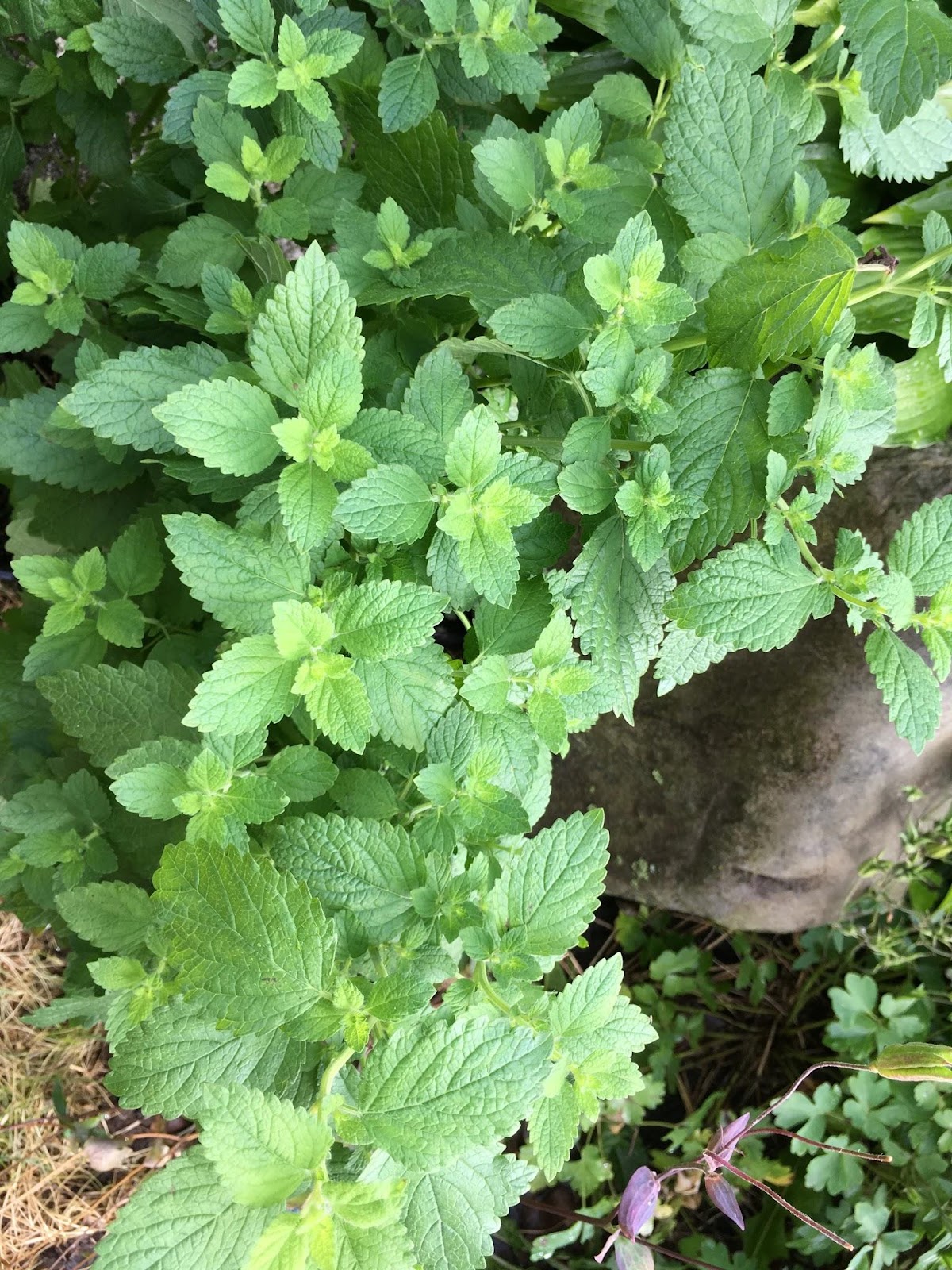
Lemon Balm - Melissa officinalis


When I moved into our current house mid-summer last year, I was astounded at the abundance of lemon balm growing in rock strewn plantings, along the house, in the yard… everywhere. An assertive grower, as many mint family plants are, the lemon balm was well established and comfortably spreading every which where. I harvested a bountiful crop, dried, and stored it. Over the winter I shared the bounty with friends. Lemon balm has many positive attributes, including a subtle lemony-flavor and sooth to nervous system. I don’t drink much lemon balm because I have a hypo-thyroid condition, and lemon balm can impact the thyroid in a ‘slowing’ or ‘calming’ capacity, which is not helpful to me. I do drink tea blends with lemon balm on occasion. I find it especially delightful in a spritzer or iced tea.
Lemon balm is easy to grow, so, if a timid or novice gardener, lemon balm eases the way into successful gardening. Put it in a pot or the ground, it does well in either; full-sun, part-shade, also both. Dry conditions, no problem if it is an established plant and in the ground (in a container, drought is another ballyhoo entirely).


Garden Use
Growing Conditions  Lemon balm is a confidant perennial to zone 4.


Preferences
Moist soil
Fun sun to part shade
Neutral pH (7.0)


Plant details
Height 2 to 3 feet
Width up to 2 feet, spreads abundantly
Companion Planting Affiliations
Bees are found of lemon balm


Care notes
Since lemon balm is an assertive grower, you might want to control it with limits; for example plant it in a raised bed, a bed with edging, or a container. Or Dig it up and share with a friend when it pops up beyond where you prefer it to grow.


Herbal Use


Parts Used  - Leaves
When to Harvest
Harvest ongoing for immediate use
Cut back early summer and again late summer and dry crop


How to Prepare
There are many ways to use lemon balm to support wellness.

> As a compress
Use a clean soft cotton cloth soaked in a strong infusion of lemon balm to relieve painful swellings (e.g. gout)

> As an infused oil
  • Begin by harvesting lemon balm leaf and drying it completely. In order to decrease the likelihood the oil will go rancid, make the infused oil from dried lemon balm leaves. If you opt to use fresh leaves, crush or chop them first, and know the shelf-life of the infused oil is considerably shorter.

  1. Fill a clean, wide-mouth glass jar ⅔ to ¾ full of herb
  2. Pour carrier oil, such as olive oil, over plant material the place lid tightly on jar
  3. Set on the counter (some folks say in a sunny window, others say a dark spot - experiment and choose your preference)
  4. Shake daily to mix oil and herb
  5. Allow to sit for at least two and up to five weeks
  6. Strain and store in a cool, dark, dry place


Penelope Ody, in The Complete Medicinal Herbal, suggests applying a warmed lemon balm infused oil as an ointment1 on chest to help open airways and soothe tension.

> As an insect repellent
  • Rub crushed lemon balm leaves onto a table to thwart insects
  • Toss a bundle of lemon balm leaves onto a campfire; the smoke repels insects

> As a steam 
A lemon balm steam reportedly cleanses pores and the skin.
  • Place crushed lemon balm leaves into a bowl
  • Pour boiling water over leaves
  • Make a loose tent using a towel over the shoulders and head
  • Breath in steam* be careful, it is steam - hot, moist air - do not burn yourself, keep a safe distance between you and the bowl, remove head from tent if the air is too hot
> In Recipes suggests Rodale’s Illustrated Encyclopedia2
  • Chop fresh lemon balm leaves and add to orange marmalade
  • Stuff fresh lemon balm sprigs into a whole fish before grilling or baking; remove sprigs before eating the fish
> As a tea
Infuse the herb in boiling water to extract many of the beneficial constituents.


  1. Boil water
  2. Place 2 tsp of fresh or 1 tsp of dried herb per 8 oz water into teapot, press, thermos, or mason jar *The Complete Medicinal Herbal by Penelope Ody states that the infusion is best made from fresh plant material.1 (aren’t you glad you have it growing in your garden?)
  3. Pour boiling water over blooms
  4. Cover (this is very important, for if uncovered the constituents will rise with the steam, and you will have a less flavorful, less potent cup of tea)
  5. Allow to steep for 10 minutes
  6. Strain and Enjoy!
Lemon balm flavor can be mild, so blending it with other herbs makes an excellent choice.
The "Medicine Chest" column of the Summer 2017 issue of Herb Quarterly suggests pairing tulsi and lemon balm. "Holy basil [another name for tulsi] and lemon balm blend calms the nerves and uplifts the spirits."3


Cautions/Considerations
Lemon Balm may slow or lower thyroid function if taken in high doses.

References
1. Ody, Penelope. The Complete Medicinal Herbal. Dorling Kindersley, 1993
2. Kowalchik, Claire, and William H. Hylton. Rodale's Illustrated Encyclopedia of Herbs: Editors. Rodale Press, 1987.
3. Graves, Maria Noel. "Medicine Chest." Herb Quarterly, 2017, pp. 20 - 22.

Thyme Herbal Profile

BeWell Bohemia Herbs & Things
Herbal Monograph, by Brooke Criswell


Thyme -Thymus vulgaris
Who does not know, and find themselves occasionally singing the lyrics of the folk song made famous by Simon and Garfunkel, “Parsley, sage, rosemary, and thyme…” The last in a list of beloved herbs referenced, thyme closes the line. Do you know the plant as well as the lyric? Does it come to mind when cooking? Considering herbal medicine? Well, this herb offers much in kitchen and apothecary alike; from the heady aroma of a thyme steam, to the flavorful seasoning in main dishes.

If you have a head cold, a thyme steam works wonders to clear your sinus and ward of infection due to its antimicrobial aromatic constituents that enter the respiratory tract upon the moist air as the steam is inhaled. Katja Swift of Commonwealth Center for Holistic Herbalist touts the effectiveness of a thyme steam, both at the onset of infection and as a preventive measure in advance of illness, “...breathe in that hot Thymey steam. It’s hot alright – and not just because the water was boiling, but also because the volatile oils themselves are super carminative. It will feel pretty intense to breathe in deeply, but try to – the further down into your lungs that you can get that Thymey steam, the more microbes you’re literally killing on contact! So breathe deep, and have your handkerchief at the ready, because this is one of the best sinus-clearing methods I know.”
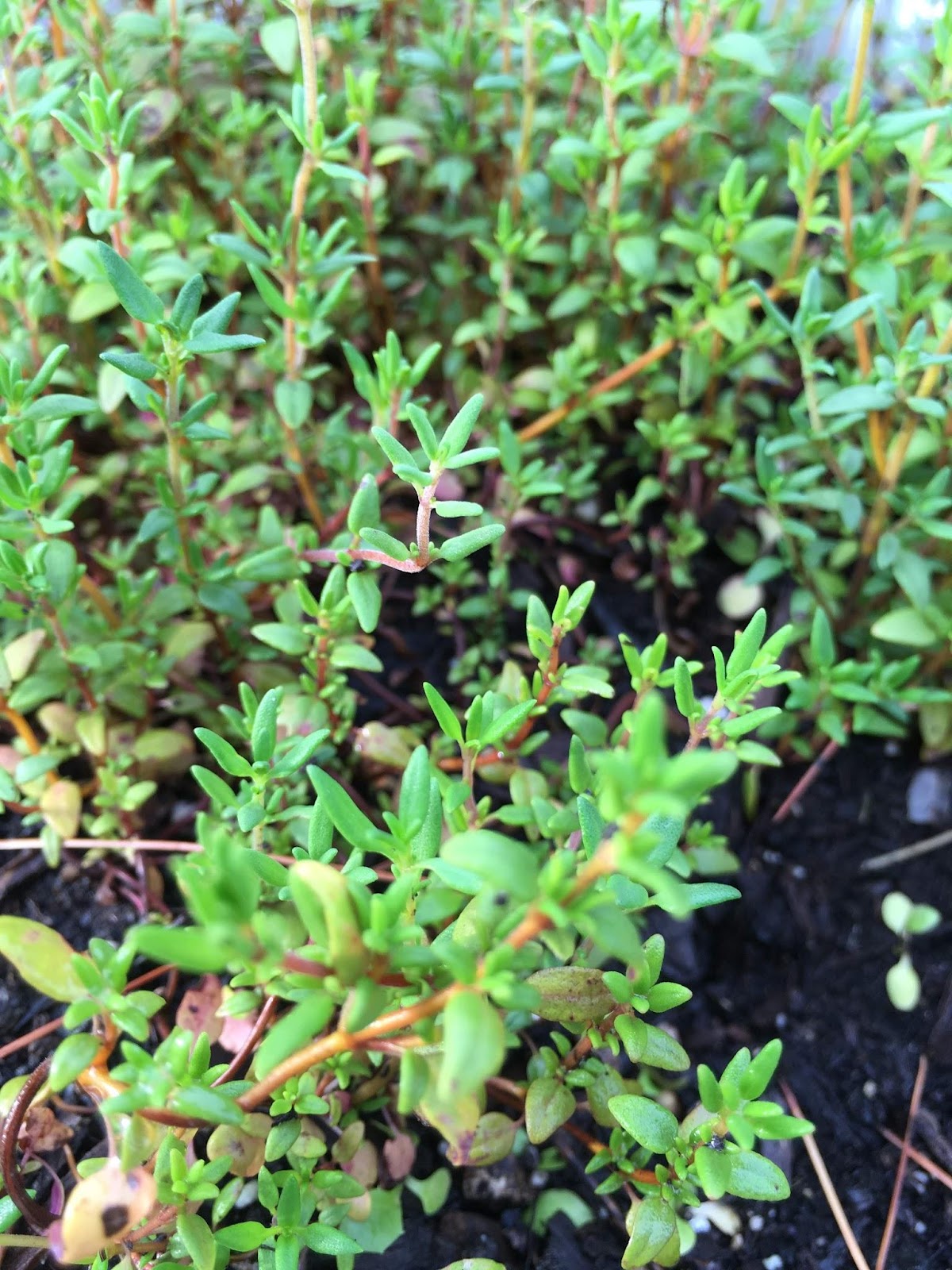
Thyme grows as a creeping ground cover, that develops woody stems in areas where it successfully overwinters. An excellent plant for rock gardens, or as a low growing plant beneath taller growers. Thyme holds a long history in Greek, Roman, and Medieval European cultures; associated with imparting courage, warding off evil, and as a healthful tonic. Contemporary research explores many and varied compounds and actions of Thymus vulgaris. The abstract of Determination of total phenolic content, antioxidant activity and antifungal effects of Thymus vulgaris, Trachyspermum ammi and Trigonella foenum-graecum extracts on growth of Fusarium solani states, “... thyme and fenugreek are spice and aromatic crops with a number of medicinal properties which are known as important sources of essential phytochemicals. The purpose of this study was to investigate the antioxidant capacity, total phenolic content and antifungal activities of these plant extracts…”  This, and many other studies, discuss the impact of thyme, in either essential oil or plant extract (in alcohol) form. The article explains the methods and conclusions of the study, including a detailed description of how the essential oil of the plants were collected, and how the plant constituents were extracted in alcohol solutions. The study showed that many phytochemicals are present in thyme, and reinforced that the method used to extract phytochemicals informs which are present, and to what degree, in the resulting item. Or to put more simply, whether you use water, vinegar, or alcohol determines what attributes of thyme are extracted; different constituents are soluble in different media. This is true not only of thyme, but of any plant used to make herbal concoctions. If you have little interest in specialized scientific research into plants, but are curious about the plant’s cultivation needs,  and at home uses, we can turn focus there.


As a home gardener, thyme will be used as a tea, spice, or even to make homemade tinctures, oxymels, vinegars, or other herbal preparations, rather than as an essential oil, which requires special equipment and vast amounts of plant material. Many of the benefits of thyme are accessible via home preparation. Additionally, thyme has much to offer the garden ecosystem: a companion to brassica family plants, thyme may repel cabbageworm and whitefly. Thyme is also reported to enhance the growth of some nightshade family plants, including potato, eggplant, and tomato.


Garden Use
Growing Conditions
Thyme grows as a bushy,  or creeping & low-growing woody perennial (depending on cultivar) in zones 5 through 9. While thyme will tolerate poor soil, good drainage is a must; without good drainage, thyme may be susceptible to fungus. TanyaDenckla, in The Gardener's A-Z Guide to Growing Organic Food states that pruning helps keep the plant bushy and prevent it becoming, “woody and straggly.”
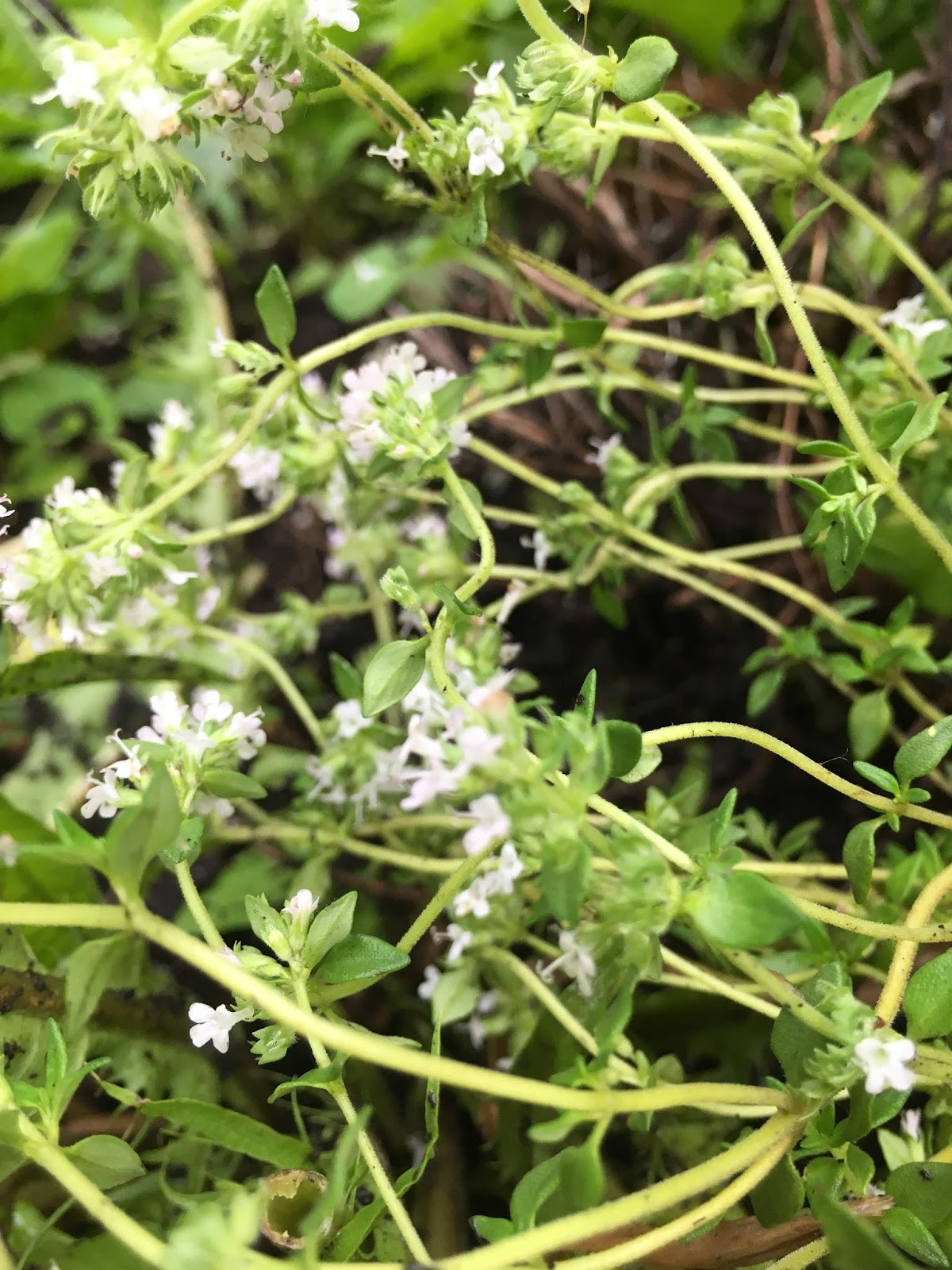
While not especially noted for its flower, thyme is a summer bloomer, flowering in June and July.


Preferences

  • Full sun
  • Well-drained, light, dry to stony poor soils
  • Tolerates drought
  • pH 5.5 - 7.0

Plant details
Flowers pink to lilac* varies (along with leaf color) depending on cultivar
Height to 12 inches* varies by cultivar`
Width 18 inches - 3 feet* varies by cultivar and pruning
Companion Planting Affiliations
Thyme enhances the growth of many nightshade family plants
Potato
Eggplant
Tomato
Thyme repels pest insects, including:
Cabbageworms
Whitefly
“Bees love the tiny blossoms.”
Care notes
Be sure to site thyme in an area of your garden that has consistent and expedient drainage. Thyme does not tolerate ‘wet feet’. Choose a spot with ample sunlight. Remember, thyme is a mediterranean plant by origin, and thus is partial to warm, balmy, sunny, and dry conditions.


Herbal Use


Parts Used  - leaves, aerial parts
When to Harvest
  • Harvest as needed for use or midsummer cut plant back to 2 inches of growth. Freeze or dry the harvest for future use. After the cutting, the thyme plant will regrow before onset of winter. Continue to make light harvests for single use, but if you trim back the second growth before winter, the plant may struggle to survive the winter.
How to Prepare
Rodale’s Illustrated Encyclopedia of Herbs asserts, “[Thyme] has served as a carminative, vermifuge, rubefacient, and antiseptic. Thyme is particularly beneficial in quieting gastrointestinal complaints…. A tea ..for shortness of breath and congested lungs.”6
Below are some ideas for using your home grown yarden thyme as a culinary spice and medicinal concoction. I love the savory flavor of thyme in tea; warming of a winter day and refreshing iced in summer.


  • As a tea - Infuse the herb in boiling water to extract many of the beneficial constituents.

  1. Boil water
  2. Place 2 tsp of fresh thyme or 1 tsp of dried herb per 8 oz water into teapot, press, thermos, or mason jar
  3. Pour boiling water over herb
  4. Cover - if uncovered the constituents will rise with the steam, and you will have a less flavorful, less potent infusion
  5. Allow to steep - 12 minutes is my favorite flavor and texture; infuse least 10 minutes to extract medicinal doses of constituents
  6. Strain and Enjoy!
    1. Drink while hot
    2. Cool, add ice, and savor the savory.

  • As a spice 
Add dried or fresh marjoram to dishes while cookingUse in recipes

> “Add sprigs of fresh thyme to olives in their brine”6

> “Serve sprigs of thyme on iced beet borscht that has been topped with plain yogurt”6

> Saute sweet peppers, onions, and garlic in olive oil; add thyme; serve over pasta, rice,(6) or spiralized vegetables

  • As a steam

If you have a head cold, a thyme steam works wonders to clear your sinus and ward of infection due to its antimicrobial aromatic constituents that enter the respiratory tract upon the moist air as the steam is inhaled. Katja Swift of Commonwealth Center for Holistic Herbalist touts the effectiveness of a thyme steam, both at the onset of infection and as a preventive measure in advance of illness, “...breathe in that hot Thymey steam. It’s hot alright – and not just because the water was boiling, but also because the volatile oils themselves are super carminative. It will feel pretty intense to breathe in deeply, but try to – the further down into your lungs that you can get that Thymey steam, the more microbes you’re literally killing on contact! So breathe deep, and have your handkerchief at the ready, because this is one of the best sinus-clearing methods I know.”1

As a flavored (infused) honey
Follow the recipe from “Pantry Profiles” in the Fall 2018 Issue of Herb Quarterly
  • Fill a glass jar ⅔ full with fresh thyme. Including leaf and blossom
  • Cover with Raw honey
  • Stir to remove air bubbles
  • Seal jar and set in a sunny window for two weeks
  • Gently heat honey over low heat (less than 110degrees farenheit) so that you may strain out the thyme
  • Place in airtight bottle and store in a cool dry place
The honey can be used to sweeten tea, or seltzers or taken by spoonful as medicinal dose, or in any way you would otherwise use honey.


Cautions/Considerations
Fresh thyme may be enjoyed ingested or topically.
Do not ingest or apply topically the essential oil of thyme, it is very concentrated and must be diluted in a carrier oil for topical use or diluted in water for steam inhalation.

Reference List
1. “Thyme: Herb of the Week · CommonWealth Center for Holistic Herbalism.” CommonWealth Center for Holistic Herbalism, 12 Apr. 2018, commonwealthherbs.com/thyme-herb-week/.
2. Gedikoğlu, Ayça, et al. “Evaluation of Thymus Vulgarisand Thymbra SpicataEssential Oils and Plant Extracts for Chemical Composition, Antioxidant, and Antimicrobial Properties.” Food Science & Nutrition, John Wiley and Sons Inc., 2 Apr. 2019, www.ncbi.nlm.nih.gov/pmc/articles/PMC6526640/.
3. Denckla, Tanya L. K. The Gardener's A-Z Guide to Growing Organid Food. Storey, 2003.
4. Buchanan, Rita. Taylor's Guide to Herbs. Houghton Mifflin, 1995.
5. Wilson, Rickie. “Companion Planting With Herbs: Boost Your Garden This Season with the Right Pairings of Plants.” Herb Quarterly, 2018, pp. 48–52
6. Kowalchik, Claire, and William H. Hylton. Rodale's Illustrated Encyclopedia of Herbs: Editors. Rodale Press, 1987.


Tuesday, June 4, 2019

Lemon Balm Bundles in the drying shed

If you watched the "Making Lemon Balm Bundles" video, you know I harvested lemon balm and wrapped stems into bundles to dry.

In the below short video, I show how I hang those bundles in my yarden shed.


Monday, June 3, 2019

Lemon Balm Bundles

Lemon balm yields prolific growth, and early harvest. In a short video, I explain how to harvest lemon balm into bundles to dry for future use.
Check it out.

Thursday, May 30, 2019

Some notes about growing rosemary


Rosemary yields many benefits, from flavor for cooking, to antiseptic properties for cleaning, and a myriad in between. Growing a rosemary plant provides you ongoing access to this magnificent herb.
But how to grow rosemary? asks my brother.
Rosemary heralds from a warm sunny clime, keep that in mind as you select your spot for cultivation.

Some things to know:
1. rosemary seed is difficult to grow - the germination rate is low, and the seedlings are very slow growing. If you are patient and optimistic then, go for it.
2. rosemary propagates most successfully from cuttings

If you have an established rosemary plant, take cuttings and root it up (I will discuss cuttings in a future post, otherwise, try here: https://www.bhg.com/gardening/yard/garden-care/starting-flowers-from-cutting/

If you don't have a plant established yet, then pick up a rosemary plant from a garden center, nursery, or local gardener.

Once you have a healthy rosemary, choose a site suited to its growth.

Rodale's Illustrated Encyclopedia of Herbs asserts that rosemary does not thrive in a container because of the needs of the root to expand and remain dry. Since a container is enclosed, there is little space for the roots to reach outward, and if the soil holds water, the conditions are too damp for the roots.  If you must use a container, choose a large container and use especially well draining soil, and watch the soil is not too long between waterings that the plant suffers a lack of water.

Rather, plant rosemary, which is a perennial in zones 8 - 10, in the ground. Choose a sunny location. Rosemary will tolerate full sun, in fact prefers full sun. Rosemary, however, does not like shady spots. Rosemary does not transplant well, again think of those spreading roots, so plant it in its 'forever home' directly from the first.

Rosemary is tolerant of a wide range of soil types; though, not a spot where drainage is especially slow, or water tends to collect. Remember the challenges posed by wet or slow draining soil in a container? Same principle, in the ground.  If the soil is acidic, "apply lime, wood ashes, crushed eggshells, or crushed seashells every two to three years" advises Rodale's Illustrated Encyclopedia of Herbs.

Quick reference:

  • full sun
  • well-drained soil
  • infrequent watering unless very dry conditions
  • neutral soil pH preferred
Rosemary makes an excellent companion to certain other plants. The article, "Companion Planting with Herbs: Boost Your Garden this Season with the Right Pairings of Plants", published in the Spring 2018 issue of Herb Quarterly magazine explains that many members of the brassica family, cauliflower, broccoli, and cabbage, "get a boost by their proximity to rosemary" since the rosemary aroma confuses the cabbage butterfly (cabbage white) and simultaneously "repels several types of flies and beetles." However, do not "plant rosemary by squash, pumpkins, potatoes, or carrots [because rosemary] will inhibit their growth." Rodale's Illustrated Encyclopedia of Herbs states that rosemary will also enhance bean plants.


Works Cited

Kowalchik, Claire, and William H. Hylton. Rodale's Illustrated Encyclopedia of Herbs: Editors. Rodale Press, 1987.


Wilson, Rickie. “Companion Planting with Herbs: Boost Your Garden This Season with the Right Pairings of Plants.” Herb Quarterly, 2018, pp. 48–52.

Sunday, May 19, 2019

Hibiscus sabdariffa, the roselle for my garden

The packet of Hibiscus sabdariffa seeds yielded 25 plants. A few of which I sold at the garden expo or as a direct order, the remainder I have transplanted to either container or garden location.
My yarden is blessed with a variety of habitats, so choosing plants suited to a niche is an important step in planting.
I am protective of the Hibiscus sabdariffa seedlings, perhaps because this is my first season growing them and I am looking forward not only to becoming better acquainted with the plant, but also hopefully harvesting calyces for making tea.
The roselle hibiscus, as Hibiscus sabdariffa is commonly called, is a native of a tropical clime, and so will not survive the harsh midwest winter of Indiana. I am growing some seedlings as annuals in my yarden, while others I planted in containers to bring indoors for the winter. (Here is a video on container gardening where I discuss how to prepare a pot for planting my roselle hibiscus). 

Hibiscus sabdariffa, like Ashwagandha, are tropical; however, the growing conditions each prefer differ greatly. Check out the post about Ashwagandha for more information on its preferences. 

Hibiscus sabdariffa enjoys warm air and soil temperatures. The plant will tolerate 'wet feet', which means it is suited to a location where the soil holds moisture.

I planted a collection of Hibiscus sabdariffa one the south side of my yarden in a low-lieing spot where the water collects, and the soil drains more slowly than many parts of the yarden. The Hibiscus sabdariffa are in two 'rows' (loosely row-like) just at the edge of some trees. The way the sun moves through the sky in summer, the area where I planted the hibiscus are in sun most of the day.

I look forward to watching them grow, and noting how the site serves the plant.

 Making a supply of the "Maple Medicinal Mushroom Concoction" I learned how to prepare during my study in the " Herbal Immers...